
Grad School without Grad School
How I'm trying to plan and prepare for my dream of getting into a doctorate program

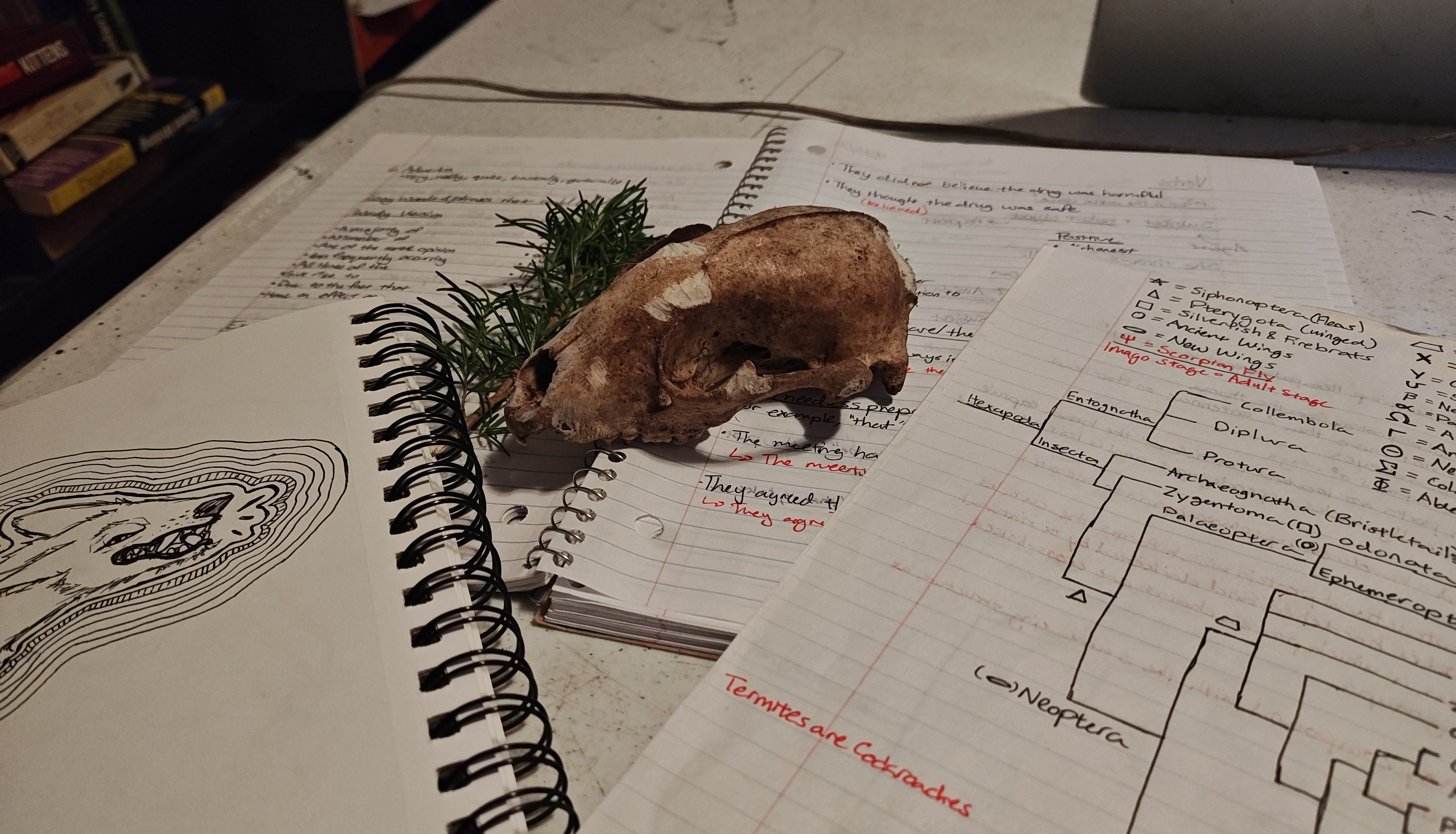
I have a goal. I want to get into grad school. Specifically, a doctorate program.
Why?
Because I want to conduct and lead research in insect conservation. Unfortunately, it’s an underfunded field within an underfunded field. Despite most animals being insects (90%), there is still so much we don’t know [1]. A great deal of those gaps are due to lack of funding [2][3]. That was before the current roadblocks tied to the US anti-science administration.
There is still so much we don’t know and I want to contribute to finding the answers. I want to lead and support research to protect the most underappreciated yet vital organisms on Earth.
Like many scientists and budding academics, I’ve had issues securing funding due to the current administration. I’m actually supposed to be in Michigan right now, but I’m not. However, I’m trying to not let that reduce my opportunities. I’m not starting as soon as I’d like, but it’s not the end! So stuck in a period of time where applications are past and I’m not having much luck finding research jobs, I’m trying to prepare.
So to make sure I’m grad school ready I’ve set some goals and have decided to go to school. Kind of.
Welcome to Ento University!
To help me prepare for grad school I’ve identified areas I am weakest in, places I want to improve, and sought-after skills in my field. I spent a couple of months scouring the web looking at job postings, grad requirements, preferred qualifications, and the like. With my research I came up with 12 “classes” I would need to take:
Applications & Career Advancement (1 unit) - This is not the typical class. Rather this is my way of motivating myself to continue applications alongside this project. It helps me carve out the time I need. Also, I will be adding time spent on my professional portfolio to this.
ArcGis (3 units) - I’ve taken this class in college and did relatively well. The learning curve was steep, but once I got the hang of it, I was able to complete some interesting projects. Having it as a class again will allow me to expand my knowledge. It’s also highly sought-after in many ecology jobs.
Botany (3 units) - While I don’t have intentions of becoming a botanist, it's good to be knowledgeable in the subject. This is because many insects rely on plants for reproduction, health, and nutrition, and vice-versa. I’ve taken many biology classes, but not an exclusive botany.
Conservation Biology (3 units) - The primary focus for this class will be diving into conservation methods both novel and old. I will also be putting a lot of time and effort looking into research and action gaps and add any activism I conduct alongside it as class hours.
Ecology (3 units) - With ecology, I will not only be studying ecological relationships, but I’ll also be studying ecology research methods and ecological calculations. A focus on population dynamics and their calculations will be important, as this is a place I’ve struggled in before.
Entomology (3 units) - This is the class that directly ties to my end goals. Although I am passionate about insects, there is a lot I don’t know. I feel like I am at the bottom of the professional learning curve. So I want to bolster my knowledge. Plus I love learning more about insects and find myself loving them more as I go on.
Grant & Research Writing (3 units) - Getting funding is important and so is knowing how to write a scientific paper. So I plan to take classes with this focus. As I practice I also hope to work with organizations to assist in grant writing.
Python (2 units) - Python is both in high demand and very useful. I found many jobs in ecology and research that ask for the experience outright or have it listed as a preferred qualification. As I’m learning I’m also seeing personal value in its data management abilities.
Scientific Communication (3 units) - Communicating science is a challenge for me and all scientists. How do I get people to care about what I care about? How do I communicate science accurately? How do I make my writing readable and entertaining? This is what I want to work on. I will even be using some of the posts I put here on SubStack to practice what I learn.
Scientific Illustration (3 units) - While not as much of a technical requirement, I figure I should add something fun. I like art and want to improve my skills. It does have the added benefit of helping me study organisms more in-depth. It allows me to gain a deeper understanding of the anatomy, locomotion, reproduction, and behavior of my subjects.
Statistics & R-Studio (3 units) - I took this class twice in college. Although I improved, I don’t feel like I grasped the content well enough to apply it to work outside of the classroom. So I want to increase my skills and expand my knowledge. Like Python and ArcGIS it’s a highly sought-after skill that I see on a lot of job postings. R-Studio might even be more important than Python and ArcGIS in the realm of biology.
Zoology & Taxonomy (3 units) - This is to help me with my ability to identify vertebrates. So far I’ve placed a lot of focus on birds, which I struggle to identify more than mammals. However, I will put time into identifying small mammals, reptiles, and amphibians. I also plan to use to practice identification skills such as using dichotomous keys.
How did I design a class and how do I know what to Study?
What I study or practice and the amount of time varies from topic to topic. Using the syllabi, I determined learning goals, got assignment ideas, found resources, and estimated how much time I should be investing. For some classes, I also signed up for an online course.
Hours and Lecture Time
I’ve heard to do well in a class you should be committing 2-5 hours of work per credit per week outside of the classroom. I heard this first in college and found it again on forums in preparation for this. I settled in the middle at 3 hours per credit. I got my credits based on the average credit number displayed on the syllabi I found. I also determined an approximate semester length of 15 weeks. Using this I would calculate my time like this:
C = Number of Credits
This allowed me to determine the number of hours of practice I should be completing to be successful.
I assigned my Python class with two credits. So using the calculation above I would end up with 90 hours of work outside of the lecture.
For my Entomology class, which I made 3 units, I would need to work 135 hours outside of lecture.
Alright so this is all well and good, but what about lecture?
Luckily, some classes, like Python, were easy in this regard. For lecture time I am taking the Harvard EdX CS50’s Python course and 2 hours of the lecture videos account for my quota[4].
For Entomology, I found a course through Great Courses[5], connected to my local Public Library[6]. I have been using that course, coupled with SciShow[7] and CrashCourse[8] on YouTube to act as lecture time.
For my other courses, it’s a mix of using Coursera, EdX, YouTube, and Documentaries.
However, I ran into an issue. I was eager to stuff as many classes into my first semester as possible, but I had a short amount of time. On top of being a tutor and my job as a Spa Attendant on the weekend I was developing an unbalanced schedule.
My first roadblock was when I started learning conditionals in Python. I just couldn’t do it. I went from being ahead in the first week to not being able to read the terminal. It felt like being transported back to my traditional lectures in college. I knew I should know it, but my mind was almost stuck. As the course progressed I was still stuck on the last thing discussed. By the time it clicked, I was lost.
For years this was an issue, even if by the end I understood what I was studying. So keeping on the theme of not fighting my brain this year, I rolled with it. I got rid of the strict calendar schedule and I added the lecture hours to my time calculation.
So now instead of the strict schedule from before, I am now tracking my progress by the number of hours. To make things much more manageable, I also track it by the minutes. So time by another name.
This has reduced a lot of the stress I was placing on myself. To me, there are many pros and a few cons to this method:
Pro’s
It works with my neuro divergent brain
One of my biggest challenges in college was my undiagnosed mental health issues. This made my ability to focus fluctuate a lot during my undergrad career. It wasn’t until my final year in college that I was diagnosed with OCD, ADD, and Autism. It was eye-opening. Unfortunately, I couldn’t get the accommodations I needed, except for one class. In my ArcGIS class, I was upfront with the professor about my new diagnosis and struggles. He was understanding and when I struggled with turning in assignments he was there to support me. In the end, I understood it and was able to ace my final project, going above and beyond expectations.
I have fluctuating focuses, so this method allows me to hyper-focus and set something else aside. One day I clocked in well over 4 hours of Scientific Illustration in a night. Another day I clocked in nearly 7 hours of working on Bird Identification.
It allows for flexibility
After graduating I got a research job, and then I was floating for a while not sure what to do with myself. With this regimen, I’m able to change this around without stress
This also allows me to be very flexible with my learning and I can take breaks! While learning Python at one point I hit a wall and didn’t touch the curriculum for two weeks. After a break, I was able to come back with a clear head and knock out multiple assignments in one sitting.
This greatly reduces my chances of burnout.
Having an ever increasing number makes me feel happy and motivated
In the back of my mind, I am now trying to find everyday little things to increase my learning and knowledge:
Identifying Insects and Birds on I-Naturalist [9]
Taking quizzes [10]
Trying to Identify local birds by call using the Merlin App [11]
Reading books
Even setting aside a couple of minutes of my time adds to my overarching goal.
It allows me to gain progress during intense study times.
I can learn more in the same timeframe.
Because I count by minutes and hours without a strict end time. I can fit more into my schedule and take breaks on certain topics while continuing to learn about others.
I’m not punished or rewarded for taking time on a task or speeding up
While I could abuse the system by sticking with the same assignment longer than I need, I have no reason to. If I finish something quickly, this just means I can diver deeper into the content.
I can change classes as needed
Quite a few times the composition and titles of my classes have shifted as I’ve learned. I have been able to add or remove things based on urgency and desire. This has also allowed me to combine and separate things if I feel a topic needs more or less attention.
Con’s
Admittedly, I need to work on my time management, and this isn’t exactly working on a strict timeline.
It’s notable that I wasn’t successful on trying to create a traditional timeline for myself.
This level of freedom means I may go some weeks without a lecture and only stick with practice. This isn’t necessarily a bad thing, but may not have a positive effect on my pre-existing struggles with consistency and focus.
This spreads out my learning time.
It’s unlikely that at my current rate, I will finish everything within 15 weeks. This doesn’t offer much help when it comes to improving my ability to meet deadlines.
Assignments & Practice outside of Lecture
Depending on what I need and the class, assignments can be easy to find or require a bit more planning and work. Python and Scientific Communication are on the easier end. The online courses I'm taking have assignments in them already. They also have recommendations on how to practice, so I follow those. In my Scientific Communication class, they said that reading fiction can improve science writing. So I've been reading more. So far I've read A Psalm for the Wild-Built by Becky Chambers and The Romantic Agenda by Clair Kann.
For other classes, I use online quizzes, look at assignments on syllabi, practice with others, and read. For example, for my Zoology & Taxonomy class, I often use the eBird photo and sound quiz[12].
I’ve also given myself different arbitrary goals to determine success. For Zoology & Taxonomy, I want to be able to get 20/20 on the California eBird photo quiz. For entomology, I want to be able to remember the scientific names of 100 insect species.
I’ve also decided that for each class I will need to complete 2 projects.
Current Numbers
While not perfect and slower than a typical semester, thus far this method of learning has been good for me. Here are my current numbers:
I started my first lecture on April 14th 2025
I’ve completed approximately 12.54% of the proposed hours or about 95 hours of lecture and practice work
I’ve had the most progress in my Scientific Communication class with it being 23.58% complete
Current Progress
Python - 9.35%
Scientific Communication - 23.58%
Entomology - 5.82%
Zoology & Taxonomy - 8.17%
Scientific Illustration - 13.47%
Applications & Career Advancement - 15.67%
Timing
As I lay everything out, I do want to speed up the timing of my progress. Looking back I see that while my assignment time has increased, my lecture time has decreased, so that’s something I need to work on. As the summer arrives I will have more time, so I can speed up my progress.
Also, without the 15-week threshold, I will be replacing each class as I finish them rather than switching to a new collection of classes. For example, if I finish Scientific Communication first I will be adding R-Studio next to replace it. I will continue doing this until I complete all of the classes.
End Goal
At the end of the day, I want to become the best field ecologist I can be.
While I’m excited for the project I recognize that there are roadblocks. I can’t get a certificate in everything I’m studying, either because of cost or it being unavailable. I’m not gathering information as fast as I would in a class. There is a possibility that the knowledge I acquire is unreliable. But, I’m trying my best to vet everything, double-check my sources, and view everything with a critical mind.
Alongside gathering my experience, I'm also creating a professional and GitHub portfolio to showcase my work. Of course, I will also post here to keep you guys updated.
If you guys are interested in the resources and courses I use to organize my classes and find assignments I will make a separate post about it with links and descriptions. A few of them that I mention directly I’ve added to the sources list below.
Sources:
https://www.royensoc.co.uk/understanding-insects/facts-and-figures/
https://www.nwf.org/Magazines/National-Wildlife/2024/Spring/Conservation/Entomologist-Shortage-Endangered-Insects
https://www.pctonline.com/article/disappearing-urban-entomologists/
https://www.edx.org/learn/python/harvard-university-cs50-s-introduction-to-programming-with-python?index=product&queryId=e93bb95eb979a6d58a2a6b93cf85c047&position=1
https://libbyapp.com/library/hpl/extras/the-great-courses/request
https://libbyapp.com/library/hpl
https://www.youtube.com/@SciShow
https://www.youtube.com/@crashcourse
https://www.inaturalist.org/home
https://quizlet.com/1041321917/insect-scientific-and-common-names-flash-cards/?funnelUUID=887f0b61-8682-4729-b6e3-92347b112afd
https://merlin.allaboutbirds.org/
https://ebird.org/quiz/
Follow me on my various other accounts to see how I progress there
Thank you for reading and stay up to date here on SubStack by subscribing