
Easter Bug Hike
Thank you everyone who made on the hike on Easter! It was so much fun and honestly, it was more stroll than Hike. We did not make it far down the trail, because we spotted so many bees, caterpillars, butterflies, birds, and so much more. We even ran into a father-son duo, who were out looking for snakes; they showed us a slender salamander they had already snagged. We got a lot of photos and had a lot of fun. Almost everyone on trail today was on their first Bug Hike. It was very exciting!
For the recap, I’m trying a new format. I’m adding questions on the trail that I got, that I either couldn’t answer or felt needed more clarification. Below that are photos of what we encountered and their identifications, to the best of my ability. Some of these may be subject to change, so feel free to check back on occasion. If you have a better grasp on what we saw let me know! Also how do you guys like this format moving forward?
Questions on the trail:
Is Field Mustard Edible?
When this question was asked, I was pretty sure Field Mustard was edible. It’s a Brassica, like cabbages, broccoli, brussels sprouts and others. Being part of a similar group isn’t enough though; something I emphasized the entire walk was that you had to be sure if you are ever trying to eat a plant. Being surrounded by Poison Hemlock (A carrot), Lupine (A Pea), and California Buckeye (also called Horse Chestnut) —all highly toxic plants— it was especially important. As it turns out Field Mustard, like it’s relatives, is edible. The entire plant is actually edible from the roots to the flowers to the seeds. It’s still important to be careful though, as there are some lookalikes that are toxic.
Read more here: https://openlearning.blog/foraging-wild-mustard-greens-avoid-toxic-lookalikes
Are Stellar Jays Invasive?
While walking the trail we were lucky to spot a decent sized group of Stellar Jays. Someone mentioned that Stellar Jays might be invasive because of a habit of raiding costal nests. I hadn’t heard of that before, and although I am always excited to see a Stellar Jay I never really question if they were Native to the area. As it turns out, they are in fact native to California! They can be found as far north as Southern Alaska and as far south as Central Honduras.
Read more here: https://www.allaboutbirds.org/guide/Stellers_Jay/overview
Did butterflies or flowers evolve first?
Flowers technically evolved first, but on the evolutionary tree the distance isn’t very large. Butterflies diversified from moths about 100 million years ago, flowers evolved about 130-140 million years ago. Moths came before flowers though, evolving about 300 million years ago.
Read more here: https://scitechdaily.com/the-origin-of-butterflies-a-100-million-year-old-mystery-unraveled/
What is the difference between a Butterfly and Skipper?
Technically, I did answer this question on the trail, but I wasn’t able to do a photo comparison. So I grabbed photos of two specimens caught on the trail in the past. On the left is a Grey Buckeye Butterfly; On the right is a Common Checkered-Skipper. There are a couple of ways to tell the difference between the two, but in this photo take a look at the antenna. Both have bulbs at the end, but the Skipper has hooked shape in it’s bulbs.


Where exactly did flowers come from? What does their evolutionary tree look like?
Flowers first evolved about 130 to 140 million years ago around the time of the Early Cretaceous. On the trail I mentioned that dinosaurs wouldn’t have had access to flowers, which is only partially true. A Stegosaurus wouldn’t have encountered flowers, but the Ankylosaurus likely would have. It seems like the first Angiosperms evolved from Gymnosperms, however it still seems a bit unclear.
Read more here: https://biologyinsights.com/when-did-flowers-evolve-and-why-did-it-matter/
Photos and Identifications from the Trail:
Variable Checkerspot - Euphydryas chalcedona


Orange Sulphur - Colias eurytheme


Six Spotted Lady beetle - Coccinella septempunctata


Sara Orangetip - Anthocharis sara


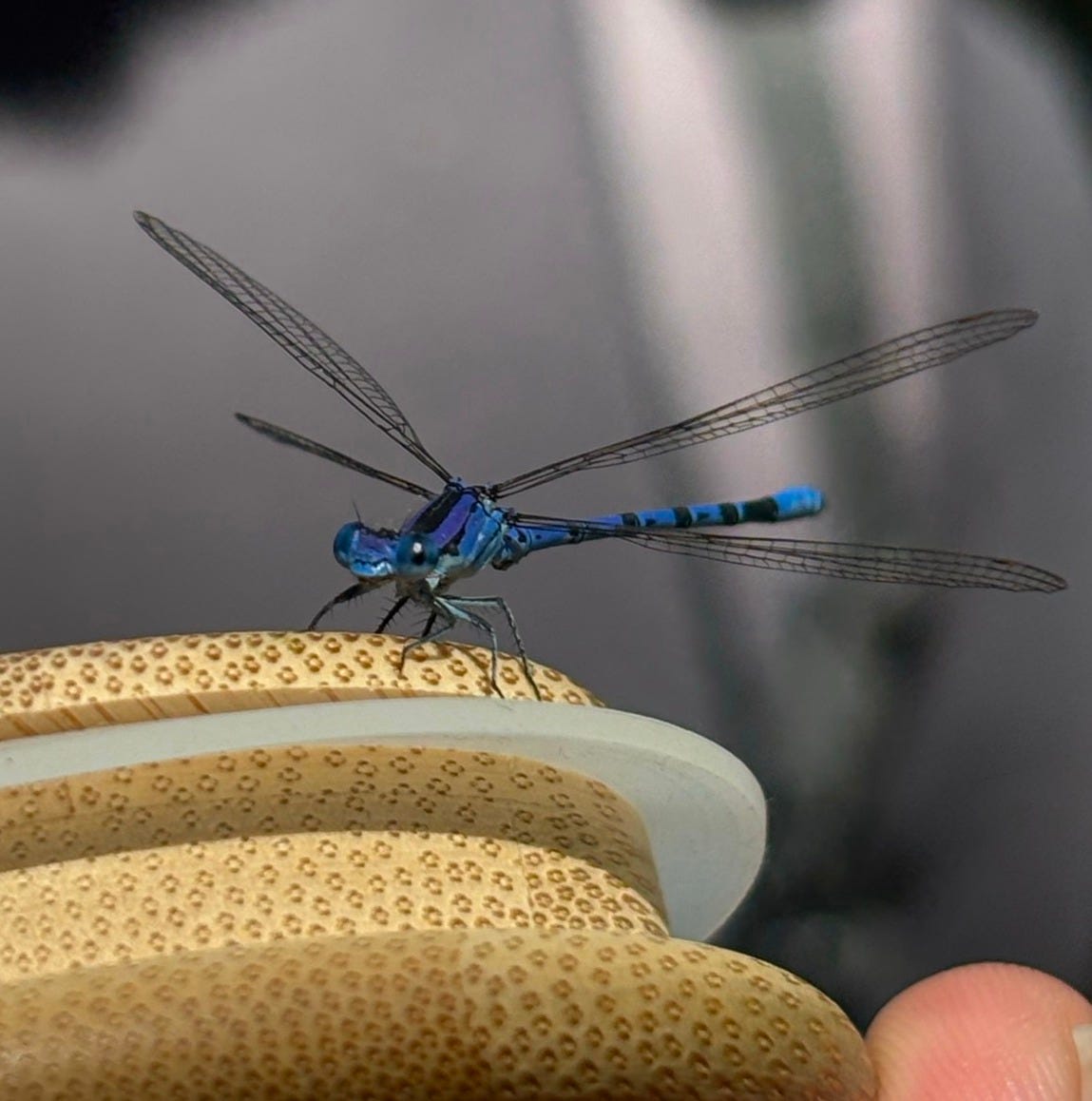
Dancers - Argia spp.


Yellow-faced Bumblebee - Bombus vosnesenskii


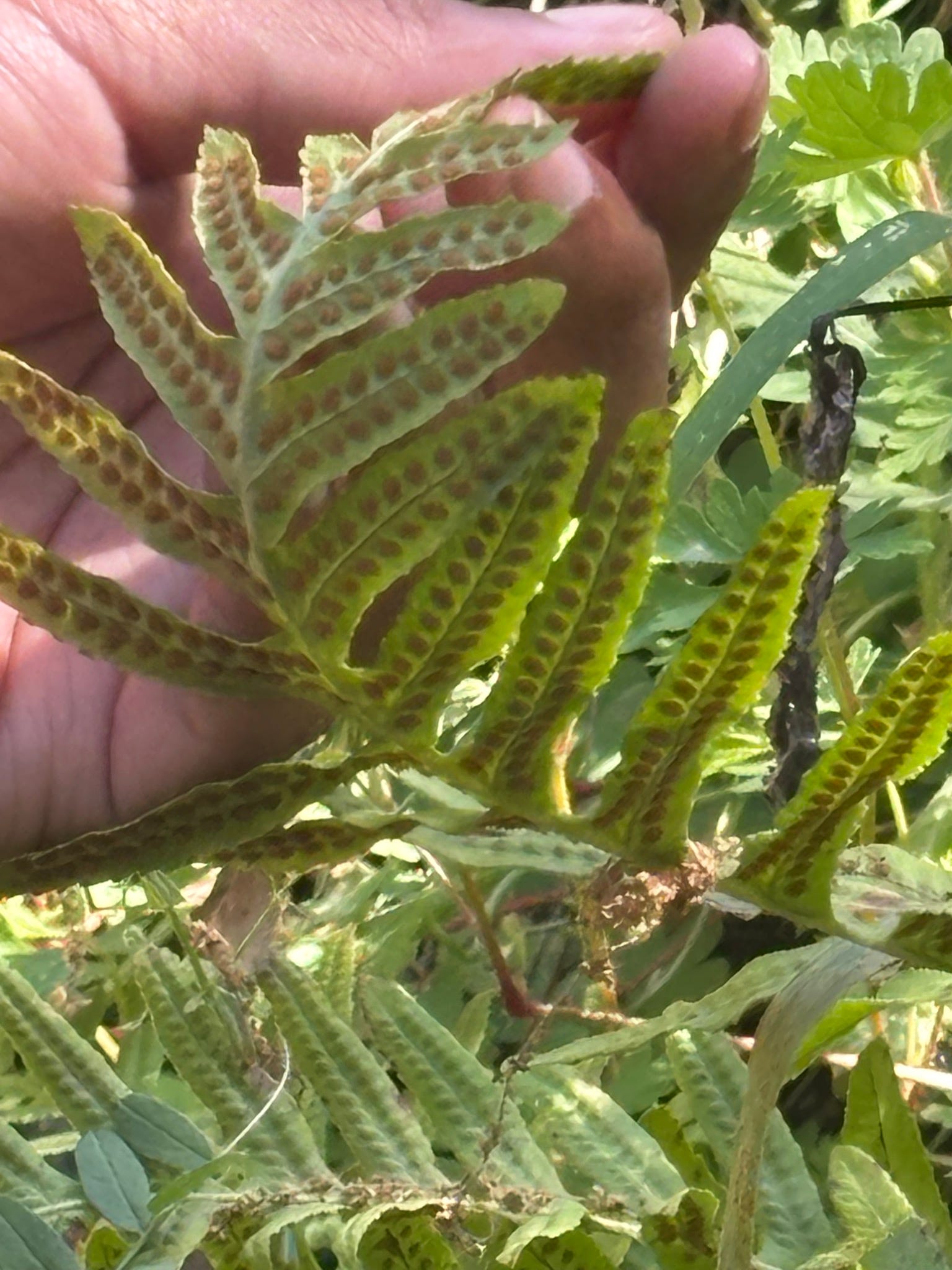
Nested Polypody - Polypodium calirhiza
Once again thank you to Thurston, Jessy, and Chris for sharing your photos with me, especially since my phone was broken.