
A Job on Fire
Growing up with Wildfires and my experience with the 4th largest Wildfire in California History (The 2024 Park Fire).

Growing up in San Diego, California, I knew that fires were common. As a kid, we used to joke that in SoCal we didn't have snow days.
We had fire days.
Sometimes the smoke in the air would be so bad we couldn't go to school. As a kid, we didn't know the impact of these fires.
Not really.
We knew fires were bad, but the idea of no school sounded pretty good then. We still played outside if the fire was far enough. If it was close, our eyes turned to the sky curious about the source of the smoke. If there were any smoke in the sky we would shrug our shoulders and say “There must be another wildfire.”
This is not to say fire was never a threat to home. San Diego burning wasn't unheard of. Some of the largest California Fires happened in San Diego at different times.
CAL Fire - 20 Largest Fires in California History
There are times I recall riding in the car watching as the hills on the side of the highway went up in flame.
As I got older the existential threat of ever-worsening wildfires became more apparent.
In 2020, the skies of California from the Bay Area to San Diego the sky seemed to catch fire. I had seen the impacts of fires before, but nothing like this. With the August complex fire burning in Mendocino National Forest, consuming over One million acres of land alongside hundreds of other fires, it's no wonder a state of emergency was declared that August. When you held out your hand you seemed to glow the same orange as the burning mountain sides. I was home during the pandemic then, doing my college courses online. An eager student studying about the natural world, as it burned right in front of me. I have asthma so I couldn't go outside. I could only watch.
The most recent impact California wildfires had on me involved my job. In 2024, I conducted research in Lassen, California, and the surrounding area. Me and five others studied pollinators and their floral interactions in fire breaks.
Fire Breaks are areas in forests that have been intentionally cleared of trees and brush so there is less fuel for fires. It also provides easier access for firefighters. Breaks in our research area varied from location to location, but the intentions were the same.
At that time Lassen was still recovering from the Dixie wildfire from 2021. As we drove through the gorgeous park, often our views were cut by black scars reaching across the landscape. In some areas, 3 years later not even the grass had sprouted again.


We were first aware of the park fire when we smelled smoke in the air. We weren't sure what it was. No ash in the sky, and no glow, so we figured it wasn't a local fire. It smelled larger than a small fire, but at this point, we couldn’t differentiate smoke from cloud. We looked up the source of the fire.
Would it disrupt our work?
Was it bad?
Was it close?
We were on our last round of sample collection and had protocols for wildfires, so we kept our eye on the updates.
It was near Chico, about 87 miles from where we lived and worked at the time. It had burned over 45,000 acres when we were able to look it up. While concerning, it wasn't affecting us directly. We could continue our work, but we had to be mindful. We had decided to start meeting together for updates at the Shingletown library where WI-FI was available.
This was on July 25th.
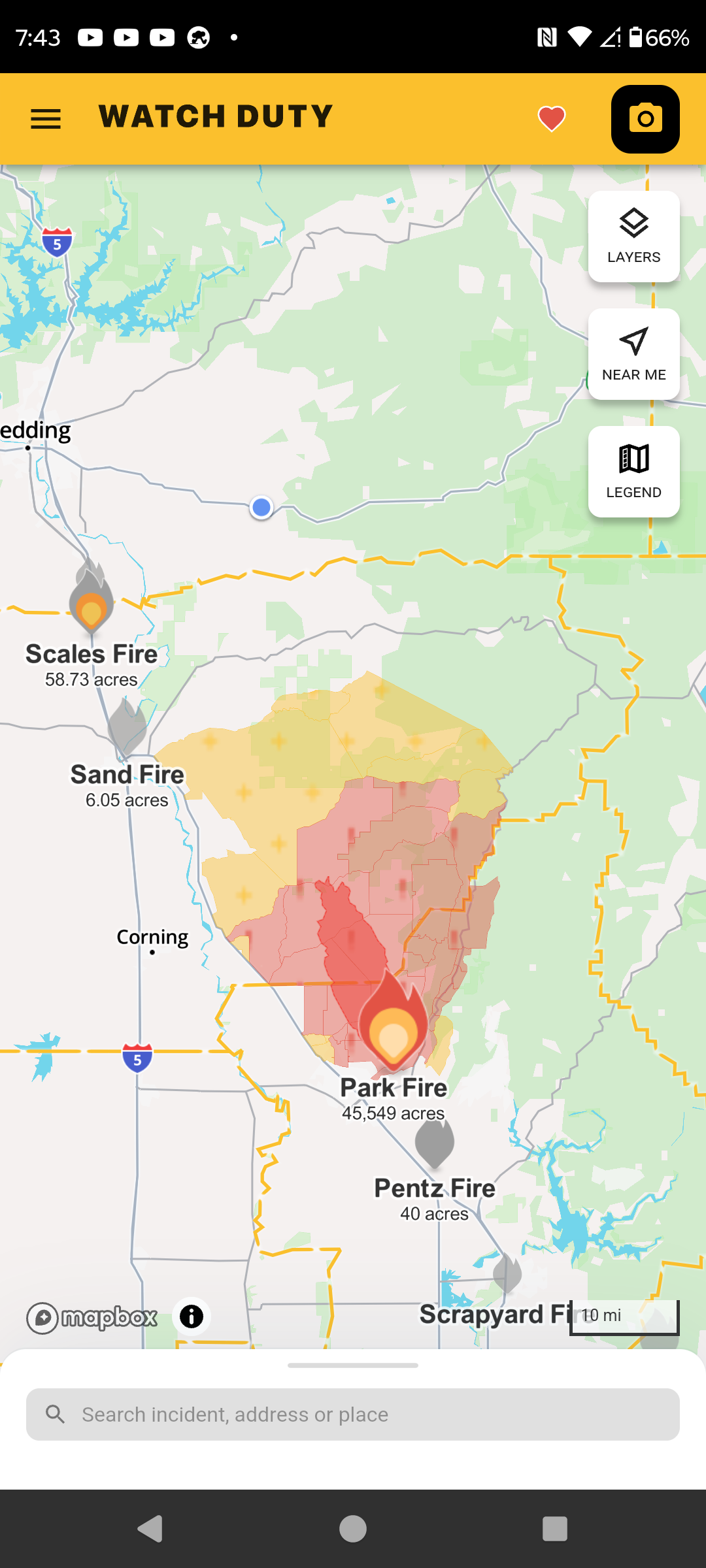
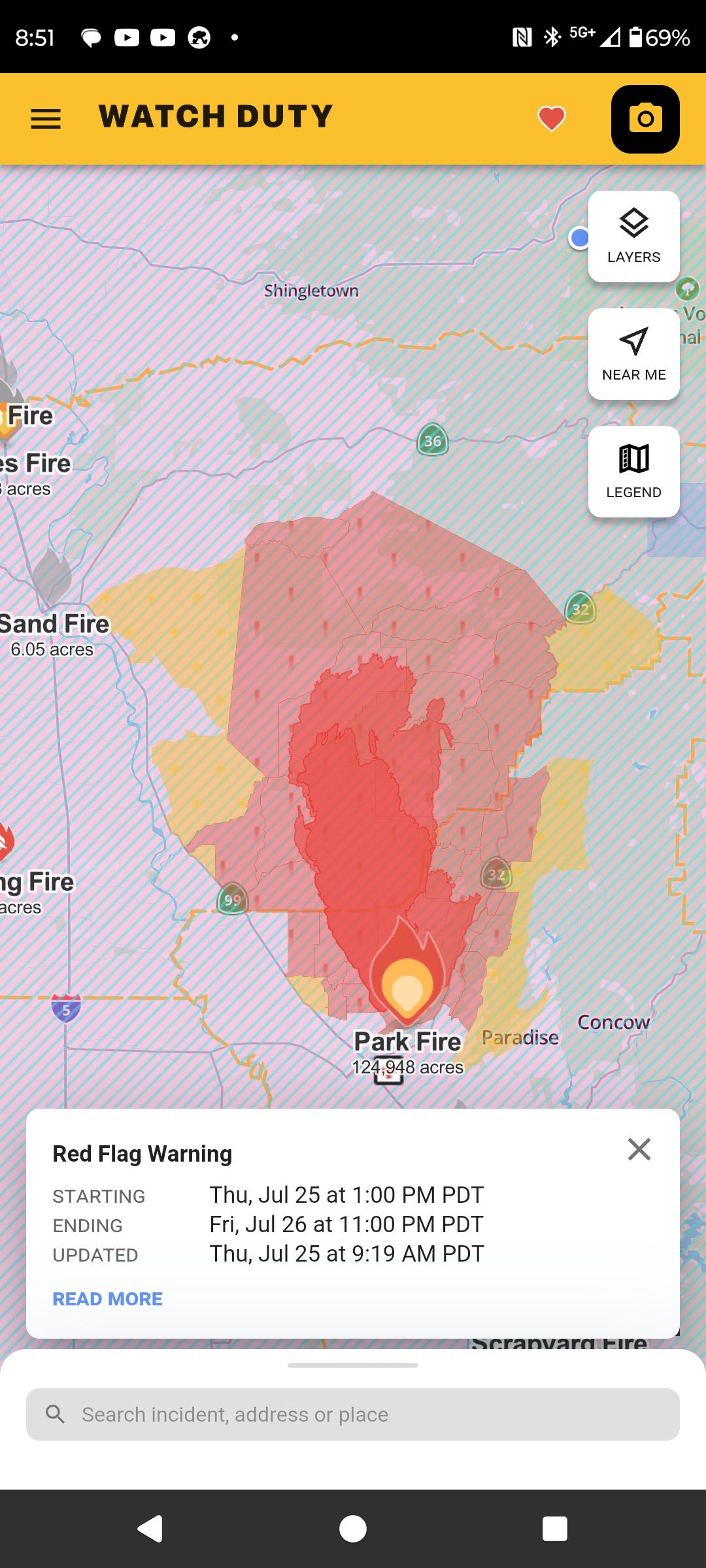
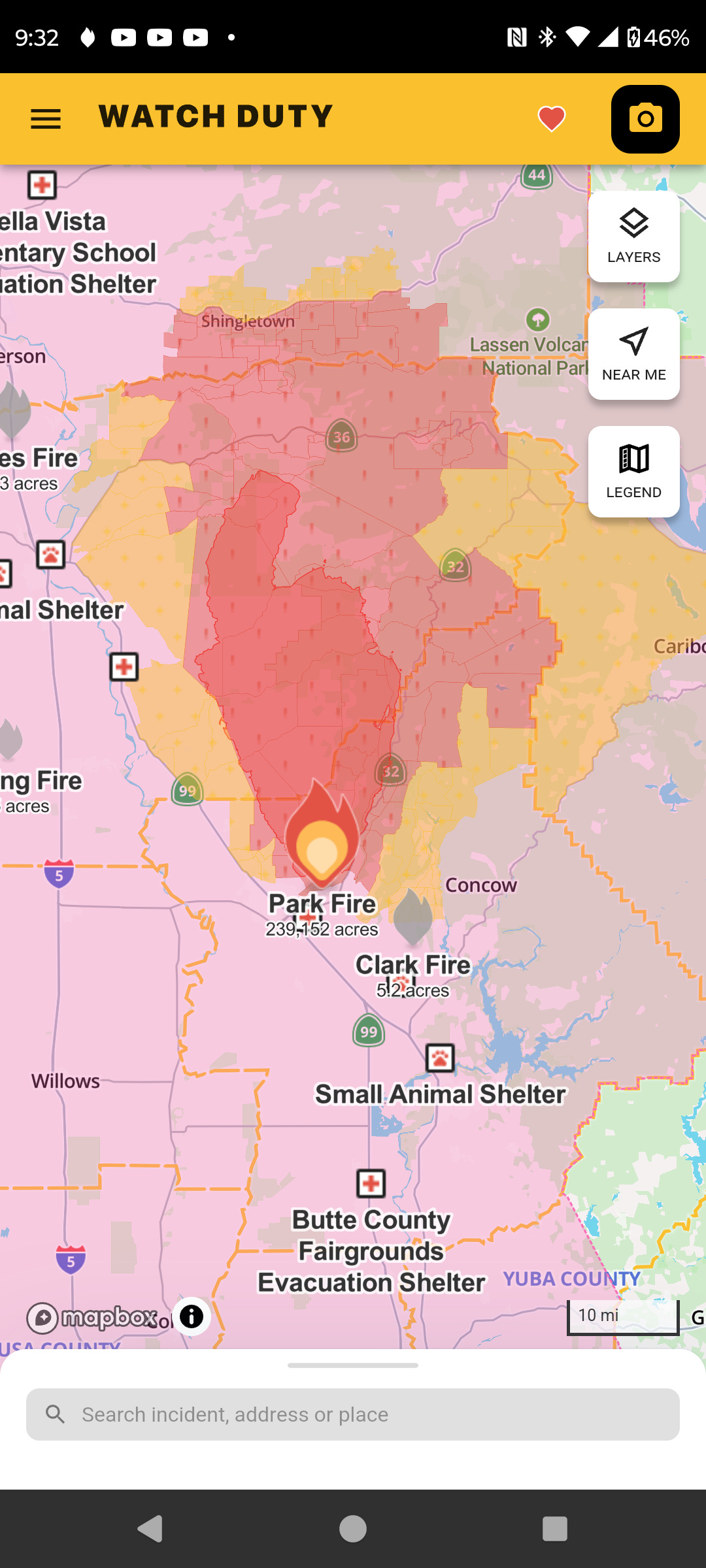
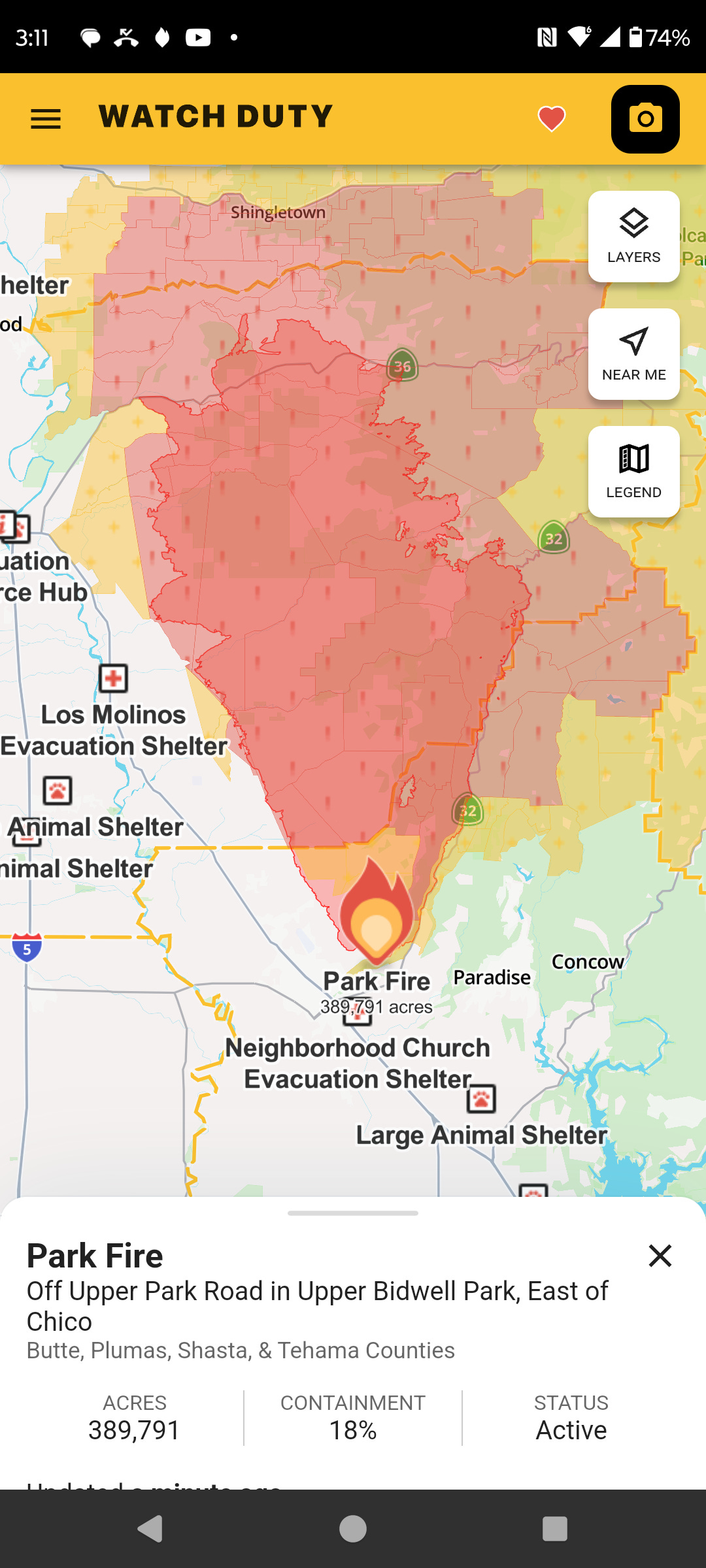
Throughout the Article I will be referencing screenshots from the Watch Duty App that I took during the progress of the fire. The more saturated red areas represents the land either burned or burning. The lighter red areas are locations that received a Level 3 - immediate Evacuation Order. The Yellow areas are locations that received a Level 2 - Evacuation Warning.
By the end of the day when we checked again, the fire had grown to over 124,000 acres. More than double what it had been that morning, and it was traveling north towards us.
Overnight it grew to well over 239 thousand acres at 0% containment. The smoke was visible now and it was getting harder to breathe. We had to collect samples early and sift out the ash from the samples.
By now the ash was falling actively, and the air was getting harder to breathe. We checked the AQI and switched to masks. In a way, we were prepared for fire. We had the tools and safety gear, but we weren't expecting this level of devastation this fast. At this point, we knew we were going to end the work early. By the afternoon the fire had grown to over 250 thousand acres. We knew we had to finish. This was our last day. We gathered our samples early and picked up the materials we could. A good number of sites were abandoned because of their proximity to the fire.
Smoke stung our eyes and clung to our skin, clothes, and hair. On top of that it was a hot day. While I don’t remember the exact temperature, I do remember how it felt. It was blistering, and with the smoke it felt like the fire was near us, even though it wasn’t the cause of the heat itself.
According to AccuWeather the days average was 38 degrees Celsius or 100.4 degrees Fahrenheit.
We had planned to stay another couple of weeks, but the fire pushed us to leave.
We had to quickly pack and evacuate. By the time we left the fire was over 357 thousand acres and the AQI (Air Quality Index) was 700.
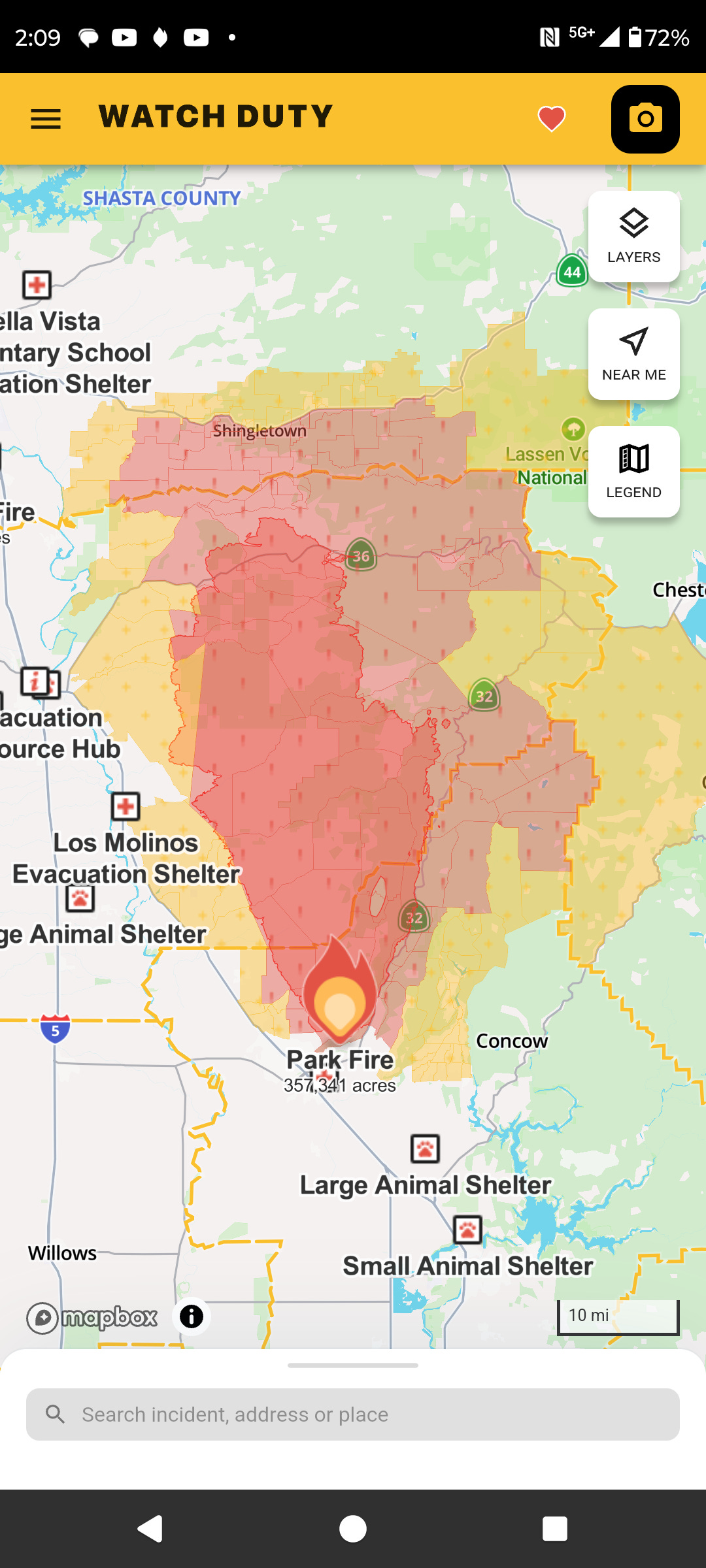
After we left the fire grew even more and the town we were next to (Shingletown) and visited often, was experiencing a level 3 evacuation order. In a few days, this fire jumped from a mild worry to the fourth-largest fire in California State History.
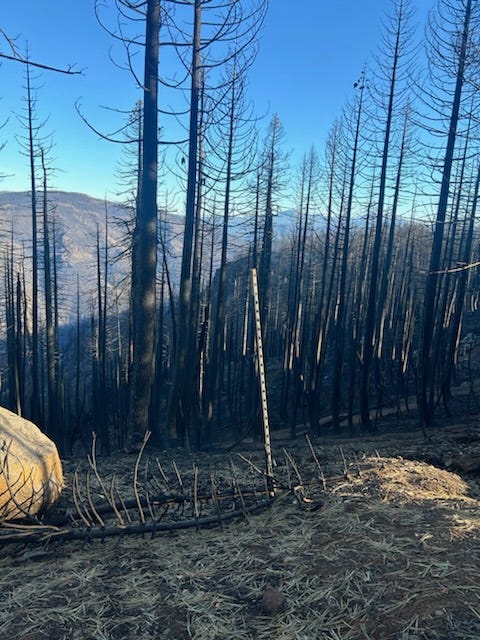
When our crew lead returned, some of our sites barely resembled what they had before.
In many ways, we were lucky. We made it out and the housing we were staying in was temporary. The whole team lived far from the Park Fire and we could go home with slight irritation.
At its conclusion, the Park fire burned 429,603 acres, destroyed 709 structures, and damaged 541. People lost their homes and their livelihoods. Something that seems to become more and more frequent as the years pass.
The intensity of the fire was exacerbated by climate change much like the current LA fires. Although the Park fire itself was caused by Arson, A car fire specifically2.
As fires continue to spread and become more and more intense in California, alongside the current fires happening in LA, I wanted to share my own experience with Wildfires. I’m fortunate that all my experiences have been at arm's length.
To read more about the LA fires and their impacts and support the people suffering please check out the links below.
Read More:

https://www.fire.ca.gov/incidents/2024/7/24/park-fire
https://www.theguardian.com/commentisfree/2025/jan/11/los-angeles-fire-fossil-fuel-big-oil
https://www.bbc.com/news/articles/c0ewe4p9128o
https://www.democracynow.org/2025/1/10/peter_kalmus_los_angeles_wildfires_climate
Potential Action:
https://actionnetwork.org/petitions/californians-make-polluters-pay
https://laist.com/news/climate-environment/how-to-help-la-fire-victims
https://www.fire.ca.gov/incidents/2024/7/24/park-fire
https://www.kcra.com/article/park-fire-arson-suspect-claims-fire-started-by-accident-butte-county-da-says/61732400
Excellent article! I learned a lot!